
WHEN BEHAVIOR HIJACKS THE DAY: SYSTEMS THAT PROTECT INSTRUCTION
You know those days when it feels like behavior takes over everything? A student refuses to participate, another student is under the table, another student is struggling to transition to a non-preferred activity, and you feel like you need to be in three places at once. And again, instruction stops.
When teachers struggle to handle disruptive behavior in the classroom, we often assume we need stronger consequences or more rules. But the issue could be something else- your classroom doesn't yet have the systems that support student regulation and predictability.
If behavior support depends entirely on the adults in the room reacting in the moment, the day can quickly turn into a cycle of interruptions. It's not realistic to try to eliminate behavior completely. Instead, we need to build systems that reduce disruptions and protect instructional time.

Why Behavior Interrupts Instruction So Easily
In many classrooms, how we respond to behavior is inconsistent. One adult might redirect verbally. Another might offer a break. Another might ignore the behavior completely. Students quickly learn that the response depends on who is supporting them and what is happening in the moment.
Without consistent systems, students rely heavily on adult prompts and corrections. This creates a classroom environment where behavior constantly pulls you away from instruction. And that's why you may be here, searching for classroom behavior management strategies when disruptions take over your day.
Here's the thing. The most effective strategies are often the simplest: predictable routines, proactive supports, and consistent responses from adults. Systems make those strategies possible.
Start With Data, But Keep It Simple
Don't cringe when I say data. I promise I won't tell you that you need a complicated tracking form with at least 4-6 weeks of data collected before it's useful. Let's start with answering a few basic questions.
When is behavior most likely to happen?
What activity is happening at that time?
What usually happens right before the behavior?
What typically happens after?
Even a few days of notes can help to reveal patterns. You may notice an increase in behavior during transitions, during difficult tasks, or when students are unsure what to do next. Once you start to identify the pattern, you can build a system that will address the cause. No more reacting! Let's move to preventing classroom disruptions before they start.
System 1: Build Predictable Routines
Predictability reduces student anxiety and confusion. When your students know what to expect, they are less likely to escalate. Visual supports and routines can make a huge difference. Think about adding:
Visual schedules that show the order of the day
First-then visuals for tasks
Timers to show how long an activity will last
My favorite strategy was using daily slides that showed students and staff where they needed to be, what materials they needed, and how long the activity would last.

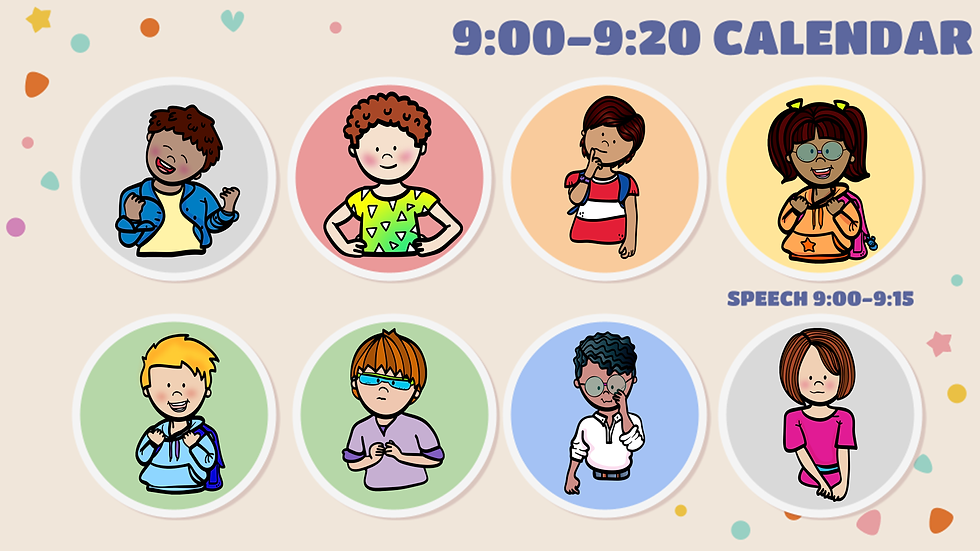
All of these supports can reduce the need for constant verbal reminders and can help students understand what is coming next. When we are trying to figure out how to handle disruptive behavior in the classroom, predictable routines are the most powerful starting point.
System 2: Plan Breaks Before Students Need Them
If you're only offering breaks after behavior escalates, you're teaching students that they have to rely on adults to intervene. Planned breaks teach students to regulate themselves. Consider adding short breaks after students complete tasks, teaching students a functional communication response for requesting a break when they feel overwhelmed, or scheduling movement opportunities throughout the day.
I've seen teachers do this in many ways. One teacher I work with has a scheduled movement break every hour throughout the day. Another teacher has students earn a 3-5 minute break at the end of each academic rotation. I used break bins in my classroom to support students who needed breaks while other students were still trying to stay focused on work. Breaks are a proactive support that is key to effective classroom behavior management
System 3: Use Reinforcement to Build Momentum
We know that students are likely to repeat behaviors that worked for them. Did they get the attention and reinforcement that they wanted? Then you will likely see that behavior again. Instead of focusing only on what students should stop doing, we need systems that reinforce what students are doing well. Catch them being good, right?
This may look like token boards, point systems, punch cards, small rewards, or preferred activities. Reinforcement helps students build momentum by experiencing success during the day, and over time, this reduces many of the disruptions that pull teachers away from instruction.
System 4: Align Adult Responses
This one is easy and is one of the most powerful behavior supports in a classroom. When adults respond in similar ways, students learn what to expect. This means using the same language for redirection, following the same expectations, and responding to behaviors consistently across staff. One simple strategy is to ensure that all adults are using "do" statements. Instead of redirecting and telling the student what not to do (don't run, we don't sit on the floor, please don't hit me), we use statements that tell them what to do (walking feet, pockets in the chair, hands to self).
I suggest taking 20-30 minutes to meet with staff and get on the same page about how to respond to different types of behavior. To start, you may want a short, easy-to-remember script for certain behaviors or certain students. Consistency across adults is one of the most overlooked factors when teachers are trying to figure out how to handle disruptive behavior in the classroom.
Systems Take Time to Work
When you introduce a new behavior system, things may get worse before they get better. Students may test the new expectations, and adults may need practice using the system consistently. Don't panic, it's normal. Stick with the system long enough for it to become part of the routine. Small improvements, like fewer interruptions, quicker recoveries, and smoother transitions, are signs that the system is working.
The Big Picture
Throughout this series, we've talked about how teaching becomes more manageable when classrooms rely on systems instead of constant decision-making. We've looked at:

Behavior systems are another piece to the puzzle. When classrooms have predictable routines, consistent responses, and proactive supports, behavior stops hijacking the day and instruction finally gets the space it deserves! Remember, if you're wondering how to handle distruptive behavior in the classroom, the anwer is most often implementing a few systems that work together to support both students and teachers. You can do this!


Comments